Ship as a landscape of Media
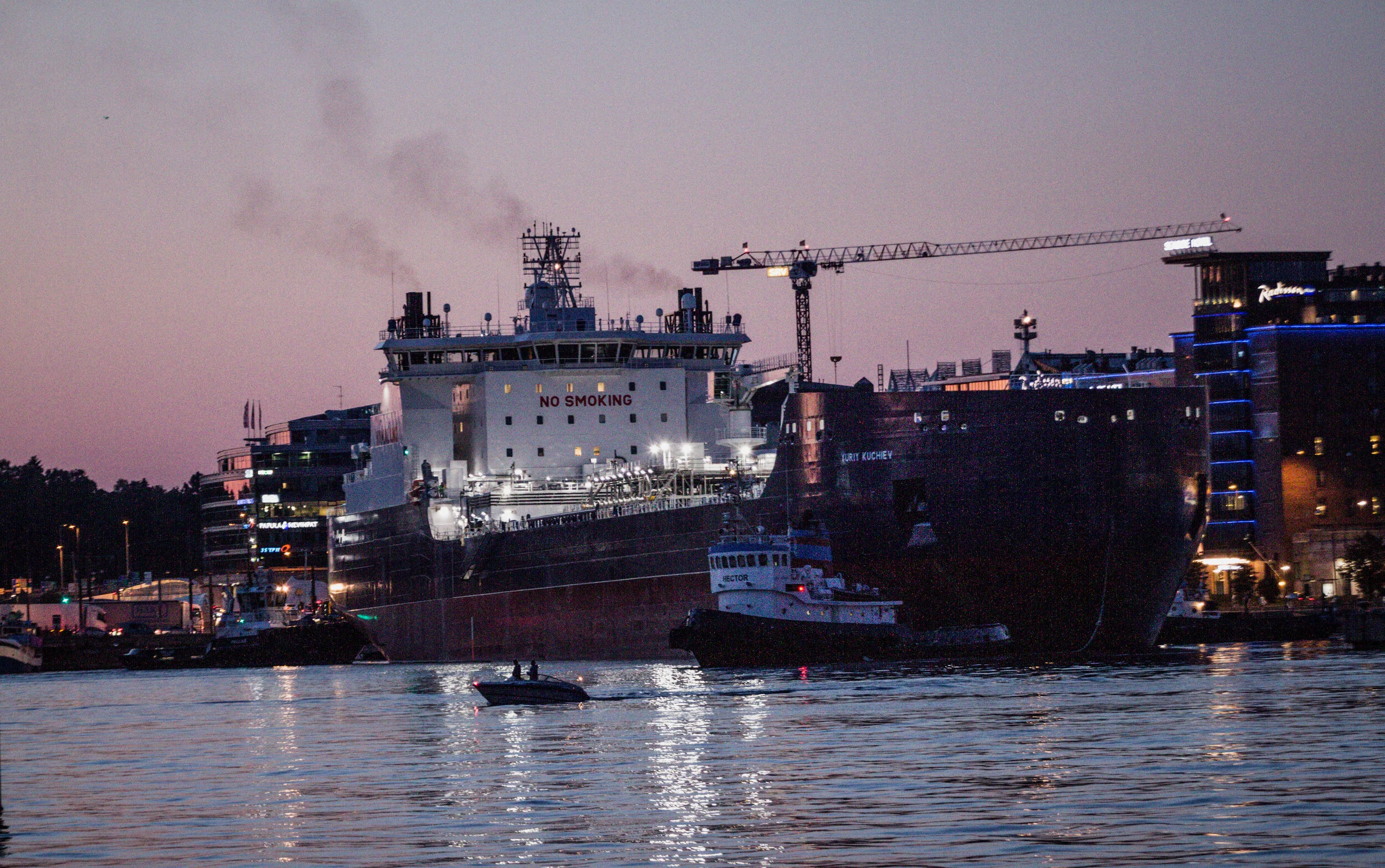
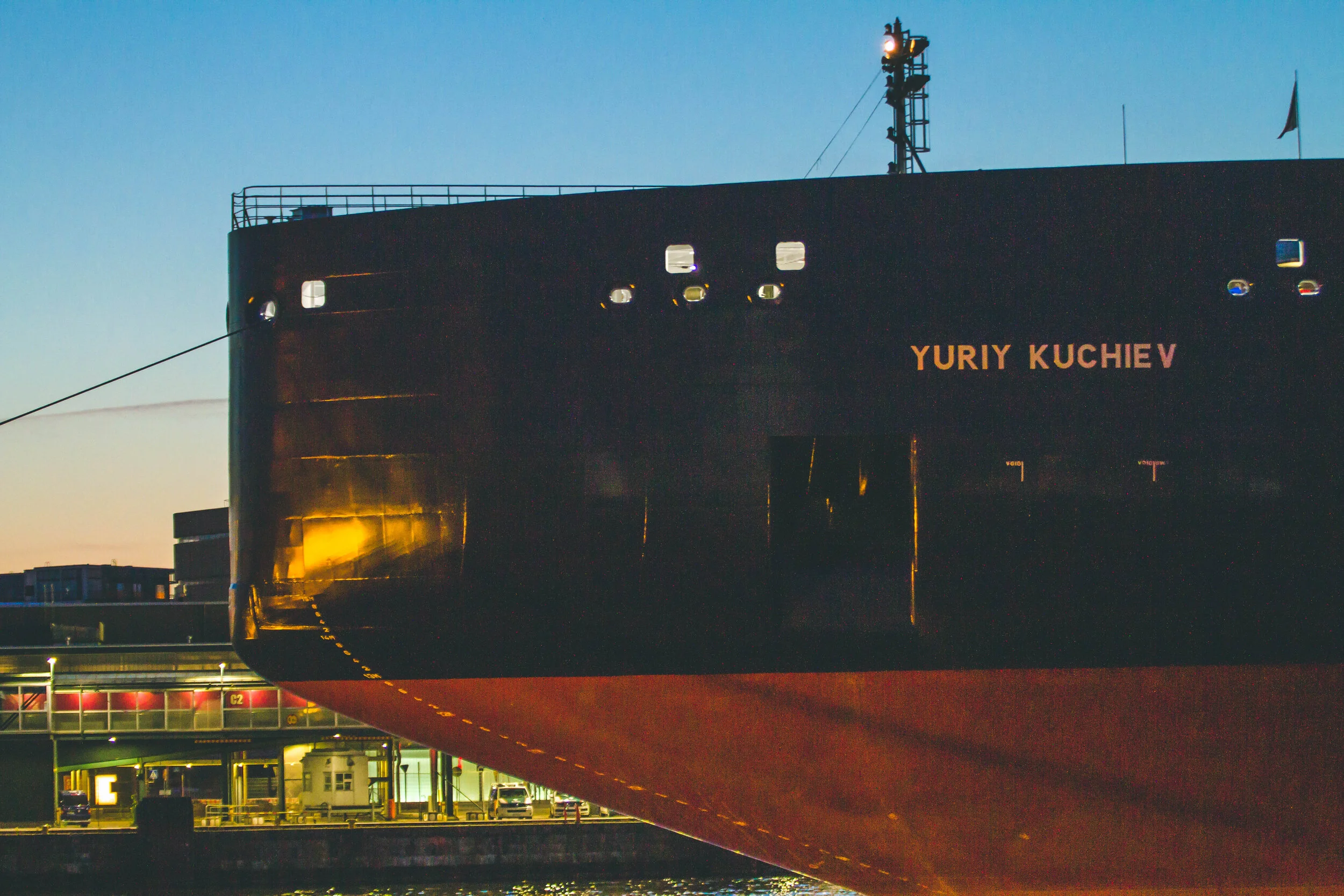
On 28 August 2019, a massive icebreaking gas condensate tanker finally set sail from Helsinki shipyard Arctech. Its first course was set to Ust Luga, Russia, and then to Yama Peninsula, which holds Russia’s biggest natural gas reserves. Gazprom, the oil company giant which owns reserves in the region proudly announces on their website to produce 360 billion cubic meters of gas per year. “Its overall production is projected to reach 217 billion cubic meters of gas and 4 million tons of stabilized condensate per year”1. Two things aroused curiosity. First, is natural gas a mineral? Second, how is natural gas related to media? A quick Google search revealed that, "generally, ores of metals, coal, oil and natural gas,..., salt and other materials extracted from the ground are considered to be minerals”. How could we investigate the media traces of a ship in the post-Anthropocene? From building a ship, the resources used, labour involved and the tracking of an ice-breaker crude oil tanker destined to natural gas reserve beyond the Arctic Circle. What immediate (negative) environmental and social impact does the ship have on the world? Could we examine the ship as a powerful tool to sustain our collapsing ecosystem?
Perhaps the answer lies in Parikk'a’s Anthrobscence. “Whether or not they are perceived in terms of media, deep time resources of the earth are what make technology happen”2. He further explains that “the knowledge thus created of the earth’s resources are mobilized toward technological production, governmental geopolitics, and increasingly a global survey of the minerals of the earth”2.
I imagine the ship as an “infrascape” that enables these transformations of earth’s systematized knowledge towards media and technological production. The ship counts as "media" by existing in the outdoors as a physical architecture2 . This is the story of a gas condensate, 230m long, 39,275 GT and 50,000 DWT made of high-strength shipbuilding steel. Assembled and partially built in Helsinki, Finland3.
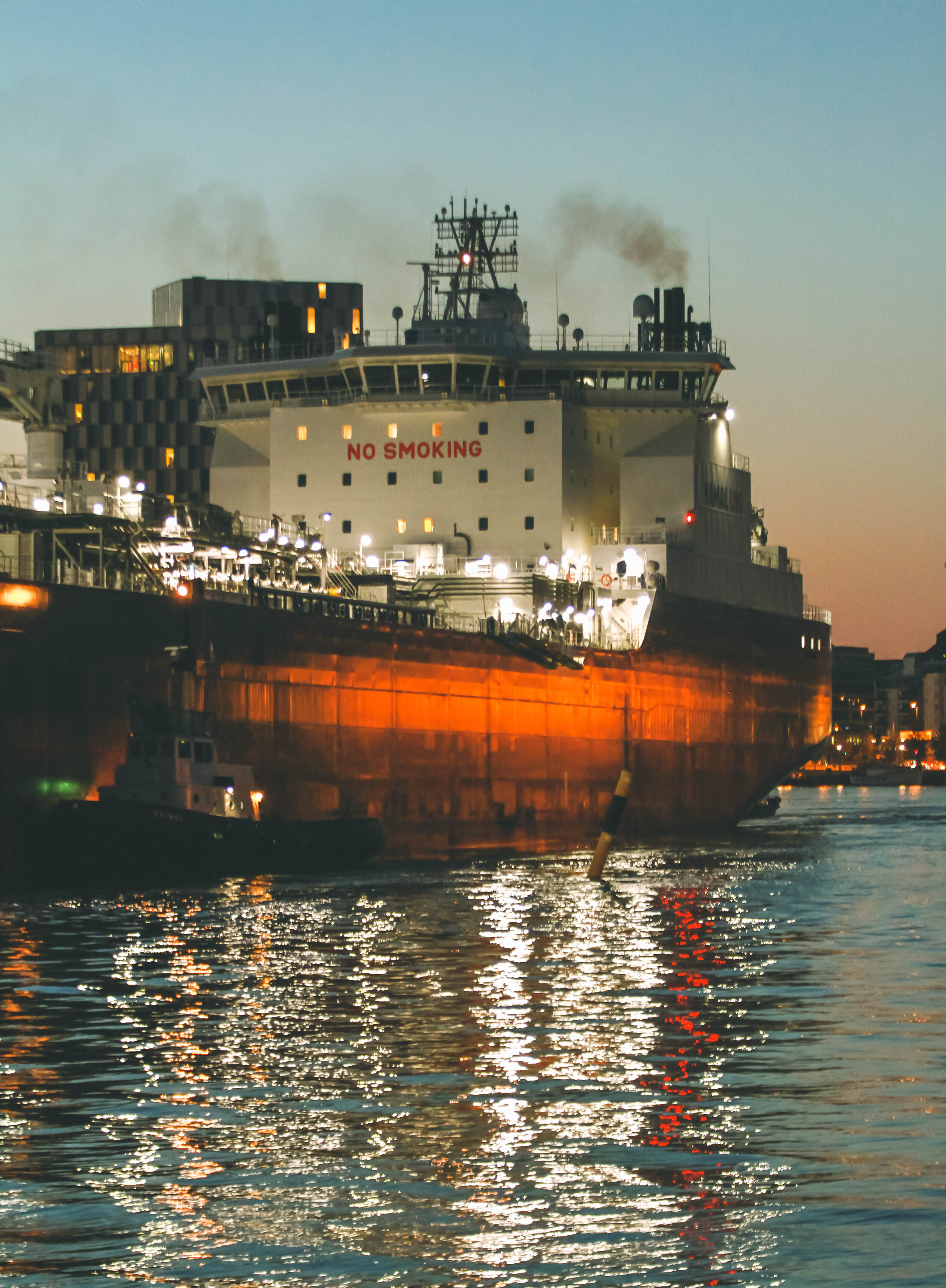
Much earlier, ship-breaking was said to have been carried out on dry-docks in developed countries. But high wages and environmental regulations resulted in transfer of the industry to developing regions, like Bangladesh, Pakistan and India. A ship is said to be built to last 25-30 years. After which they’re disposed-off by a most common process called “beaching”. Decommissioned ships are sent off, or in some cases sold, to a “graveyard of ships” where local workers dismantle the ship in hazardous conditions without proper protection. It’s rather interesting to note that assemblage is done in a first world country like Finland owing to high technology available locally, whereas stripping down a run-down ship is left to the economically weaker sections of the society who are least protected by laws, namely the global south. In a documentary by National Geographic on ship graveyards, labourers are seen breaking down complex metal structures of ships using cutting torches4. Can they, then, be called informal “media archaeologists”? Those who “excavate” a dead ship for its recyclable parts like steel and wires. Other methods include scuttling or sinking the ship in open waters.
While in the more progressive countries where ships are built, advanced technology like smart robotics is employed to weld giant pieces together. While life is important at one stage, neither environment nor human life is values towards the end of a ship’s life.
Shipping is said to be the most economical way of transportation. It plays a major role in world’s economy and is dubbed to be the backbone of the economic system. The industry is also among the highest polluters in terms of daily emissions and when decommissioned after usage.
In 2019, a review of the shipping industry and ship building by BRS states that, “The need for fuel-efficient and compliant vessels threatens to render many existing vessels commercially and technically obsolete. It is said that LNG fuel is the future of the Shipping industry. LNG fuel helps in reduction of air pollution from ships, and a combination of LNG fuel with diesel oil will lead to efficient engine performance, resulting in fuel-saving. In other words, it attracts mega investors to invest in future technologies”, while Russia being the largest reservoir of natural gas5.
Thus, while an average 1,100 ships were ordered per year in 2017 and 2018, this number could rise after 2020 when new vessels will be needed to replace the non-eco fleet delivered in 2005-2010 (going from 1,400 in 2005 to 2,200 in 2010). It is unlikely there will be a one-to-one replacement as too many ships were ordered in the boom years. However, any demand substantially above 1,200 ships per year will create tension and will inevitably push up new building prices”. This indicates an increase in not just prices for ships, but demand for newly built ships as well, adding to the mounting fleet of inscribed infrascapes of dead ships. No doubt, today, these are the landscapes of energy and energy transactions.
While in the more progressive countries where ships are built, advanced technology like smart robotics is employed to weld giant pieces together. While life is important at one stage, neither environment nor human life is values towards the end of a ship’s life. Shipping is said to be the most economical way of transportation. It plays a major role in world’s economy and is dubbed to be the backbone of the economic system. The industry is also among the highest polluters in terms of daily emissions and when decommissioned after usage. In 2019, a review of the shipping industry and ship building by BRS states that, “The need for fuel-efficient and compliant vessels threatens to render many existing vessels commercially and technically obsolete. It is said that LNG fuel is the future of the Shipping industry. LNG fuel helps in reduction of air pollution from ships, and a combination of LNG fuel with diesel oil will lead to efficient engine performance, resulting in fuel-saving. In other words, it attracts mega investors to invest in future technologies”, while Russia being the largest reservoir of natural gas5 . Thus, while an average 1,100 ships were ordered per year in 2017 and 2018, this number could rise after 2020 when new vessels will be needed to replace the non-eco fleet delivered in 2005-2010 (going from 1,400 in 2005 to 2,200 in 2010). It is unlikely there will be a one-to-one replacement as too many ships were ordered in the boom years. However, any demand substantially above 1,200 ships per year will create tension and will inevitably push up new building prices”. This indicates an increase in not just prices for ships, but demand for newly built ships as well, adding to the mounting fleet of inscribed infrascapes of dead ships. No doubt, today, these are the landscapes of energy and energy transactions.
1https://www.gazprom.com/projects/yamal/
2Bhowmik, S. , & Parikka, J. (2019). Infrascapes for Media Archaeographers . In M. Hiller, & S. Höltgen (Eds.), Archäographien: Aspekte Einer Radikalen Medienarchäologie (pp. 183-193). Berlin: Schwabenverlag AG.
3Kajosaari, Markku (2018), "New type condensate tanker for arctic operation", in Kujala, P.; Lu, L. (eds.), Marine Design XIII: Proceedings of the 13th International Marine Design Conference (IMDC 2018), June 10-14, 2018, Helsinki, Finland, 1, Taylor & Francis Group, pp. 77–82, ISBN 978-1-138-34069-5
4Nationalgeographic.com. (2019). The Ship-Breakers. [online] Available at: https://www.nationalgeographic.com/magazine/2014/05/The-Ship-Breakers/ [Accessed 25 Nov. 2019].
5BRS-Review2019-01-Shipbuilding
(This blog post was first published in Infragraphy Vol 2, a publication of Aalto University Medialab. It consists a compilation of other critical student artworks in Fall 2019.)
My curiosity around shipping industry and effects of traffic in the northern seas was continued during my residency at Platform rf, Vaasa in winter 2020. It led to new areas of interests in geopolitics, humanities and environment, and interaction between human and non-humans. You can read more about it here: https://www.surabhinadig.com/blog/perturbations